
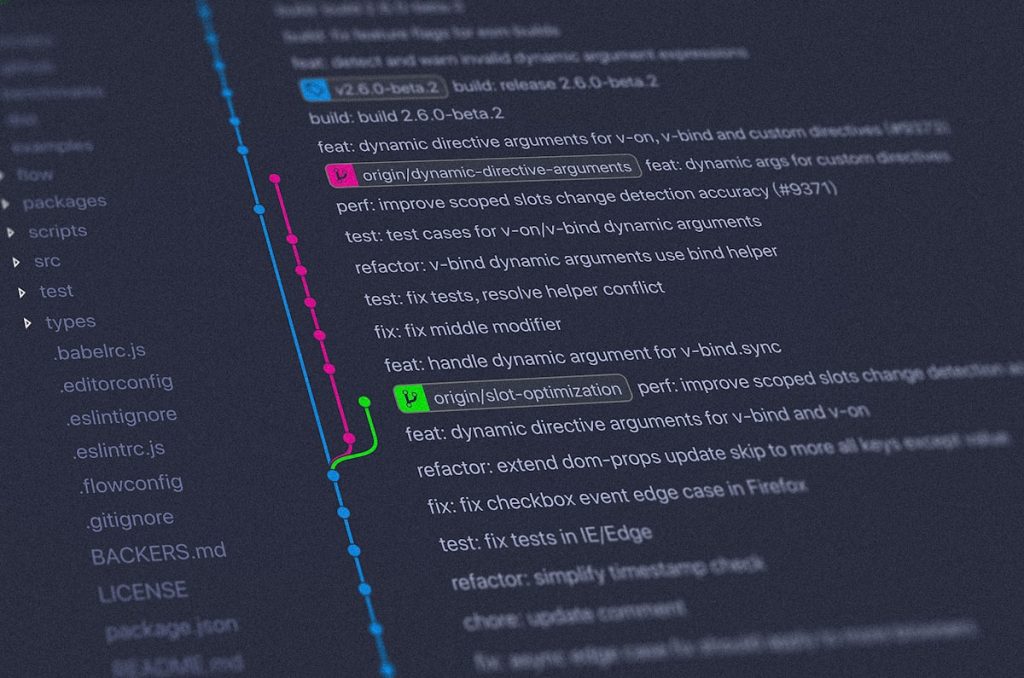
Claude Code Injected Session URLs into Every Commit by Default. The Privacy Angle Is a Distraction.
On August 29, 2026, a GitHub issue titled “Session URL appended to commit messages and PR descriptions by default — should be opt-in” climbed to 353 points on Hacker News and collected 211 comments. The issue itself is factually simple: Claude Code had been silently appending a Claude-Session: trailer containing a full session URL to every commit message and pull request description created during web and Remote Control sessions. No prompt, no warning, no mention in onboarding. Developers discovered it after it was already in their pushed history.
The discussion that followed predictably centered on privacy: “private session IDs in public repositories,” “spooky behavior,” “surveillance.” These are legitimate concerns, but they are not the most important thing this incident reveals. The more instructive lesson is about defaults as product decisions, and about who pays the cost when a product team chooses convenience for itself over predictability for its users.
I have spent the past year building production workflows on top of AI coding assistants, including Claude Code. This incident made me stop and audit every setting I had assumed was benign. That audit was uncomfortable. Here is what I found and what it implies for anyone building on top of AI tooling.
What Actually Happened
The technical facts are not disputed. Claude Code — specifically in web and Remote Control sessions — began appending a trailer that looked like this to commit messages and PR bodies:
Claude-Session: https://claude.ai/code/session_01JXQ9RMZP7VKBNHW23TQFD9MKThis URL is a live link to the Claude session that produced the code. In a private repository with a private Claude account, this is merely annoying. In a public repository, it leaks a session identifier to anyone who reads the commit history. For teams using Remote Control — which, as one commenter noted, is now effectively the default for all sessions — this affected every commit, in every repository, without exception.
The setting to disable it exists: {"attribution": {"sessionUrl": false}} in ~/.claude/settings.json. The problem is that this setting does not persist across web sessions, which start in fresh containers. Disabling it per-project requires committing a .claude/settings.json into every repository. There is no account-level control that covers web sessions. Users who told Claude Code in conversation not to add the link found that it returned on the next commit — because the instruction is re-injected at the system level per commit, overriding conversational memory.
The Anthropic collaborator who closed the issue cited the existence of the setting as sufficient resolution. The issue author reopened it and explained, carefully, why “can be turned off” and “should be on by default” are separate questions. The issue was closed again. As of this writing, the session URL is still on by default in web and Remote Control sessions.
The Default Is the Product Decision
When a product team sets something to default-on, they are making a claim: “We believe the majority of our users want this, or we believe the benefit to us is worth the cost to users who do not.” When they set something to default-off, they are making the opposite claim. Defaults are not neutral starting points. They are the actual behavior for every user who never reads the documentation.
The session URL trailer is useful to Anthropic. It creates a breadcrumb in public commit history that links back to Claude Code, which is a marketing signal. It makes Claude Code’s contribution to open-source projects visible in a way that “Co-Authored-By: Claude” alone does not. I am not speculating about intent here — the trailer is literally a URL to a branded product page. The beneficiary is identifiable.
The cost falls entirely on the user. The cost is: commit history you did not choose to create, session identifiers you did not choose to share, and discovery friction measured in GitHub issues, StackOverflow questions, and the minutes spent reading JSON documentation that most users will never find.
This is the structure of a bad default: the person who set it benefits, the person who lives with it pays. Good defaults work the other way: the default behavior should be the choice a well-informed, typical user would make if they had read the documentation and thought about it for thirty seconds.
A well-informed developer asked “should my git commit messages contain a URL linking to my Anthropic session?” would, in the overwhelming majority of cases, say no. Not because they are paranoid about privacy, but because commit messages have a purpose and session URLs are not part of it.
The Pattern Is Not Unique to This Feature
I want to be careful not to overstate the severity of this specific incident. A session URL in commit messages is not a catastrophic security failure. It is, at worst, a minor privacy leak and a persistent source of commit message pollution. But the pattern it exemplifies is worth taking seriously, because it shows up repeatedly in AI developer tooling.
Here is a partial taxonomy of the same pattern across tools I have used in the past twelve months:
| Tool | Default-on behavior | Who benefits from the default | User cost |
|---|---|---|---|
| Claude Code | Session URL in commit messages (web/RC sessions) | Anthropic (brand visibility in public repos) | Commit pollution, session ID exposure |
| GitHub Copilot | Telemetry and code snippet collection (until 2024 opt-out change) | GitHub/Microsoft (training data) | IP leakage risk for proprietary code |
| Cursor | Full codebase indexing sent to remote servers on first open | Cursor (context quality, retention) | Unintended data transfer, compliance exposure |
| Replit AI | Project visibility defaulting to public on free tier | Replit (community growth, showcase content) | Accidental public exposure of work-in-progress code |
| Various AI CLI tools | Usage analytics enabled, no prompt | Vendor (product telemetry) | Data leaving the machine without explicit consent |
The commonality is not malice. It is a product team optimizing for the vendor’s metrics — attribution, training data, retention signals — using the path of least resistance: make it default-on and add a setting to disable it for users who care enough to find it.
From an engineering standpoint, this is a fragility. Every one of these defaults is a trust withdrawal from your user base. Each withdrawal is small. The cumulative effect, across an ecosystem of tools where every vendor has made similar choices, is that developers now audit their tooling the way they audit third-party libraries: assume it is doing something you did not ask for until you verify otherwise.
Why “The Setting Exists” Is Not an Acceptable Closure
The issue author’s reopening comment is worth reading in full, but the core argument is this: the population of users who are affected by a default-on behavior is not the same as the population of users who will find and change a setting. The gap between those two populations is the gap between “technical capability” and “actual product behavior.”
In the Claude Code case, this gap is structurally enforced by the architecture:
- Web sessions start in fresh containers. Global settings do not persist across sessions.
- The only persistent override is a per-project
.claude/settings.jsoncommitted to each repository. - There is no account-level setting that covers web sessions.
- The in-conversation instruction to stop adding the URL does not override the system-level injection.
This means that even a user who has found the documentation, who knows the correct JSON, and who has explicitly told the tool to stop, will find the behavior reinstated in any new repository or fresh session. The setting is real. Its practical effect is limited to developers who are comfortable writing JSON configuration files and who remember to add the file to every new project they create.
I tested this personally. I run Claude Code in Remote Control mode for a production monorepo. After reading the issue, I added {"attribution": {"sessionUrl": false}} to the project’s .claude/settings.json. It worked. Then I opened a new experimental repository I had been meaning to start, forgot to add the file, pushed three commits, and went back to read the history. The session URLs were there.
The setting exists. The setting does not solve the problem for the user who is not thinking about the setting at the moment they commit code. That is most users, most of the time, which is why defaults matter.
The Deeper Engineering Question: What Is a Commit Message For?
There is a philosophical question underneath the product design question, and it is worth spending a paragraph on it: what is a commit message for?
The conventional answer, the one that has governed version control practice for forty years, is that a commit message is a record of why a change was made. It should be legible to a human who reads it six months later without any context. It should contain information that is not easily derivable from the diff itself. It should be compact, because it lives in a history that accumulates indefinitely.
A session URL satisfies none of these criteria. It is not legible without an active session context. It does not explain why the change was made. It is not compact — a full URL is typically 60-80 characters of noise appended to every history line. And it has an expiration problem: if the session is ever deleted, or if Anthropic’s URL structure changes, the link is a dead artifact in immutable history.
The “Co-Authored-By: Claude” trailer, which also ships by default but which has broader community acceptance, at least answers a coherent question: who contributed to this commit? The session URL answers a question that most commit readers are not asking: where can I find the Claude conversation that produced this code?
The answer to that question may occasionally be useful — in a debugging context, in a code review where you want to understand the AI’s reasoning. But is it useful enough to be included automatically in every commit? That is the product judgment call, and it is not obvious that the answer is yes.
What Good Default Design Looks Like in Practice
The issue author proposed four acceptable resolutions, any one of which would have been sufficient:
- An account-level setting covering all web and Remote Control sessions.
- A
/attributioncommand that writes the setting into the current project. - A one-time prompt on the first commit with a “don’t add this again” option.
- Default
sessionUrlto false outside Remote Control.
Each of these is a legitimate product solution. None of them are technically difficult. The cost of implementing any of them is measured in hours of engineering time. The cost of not implementing them is paid by every user who has ever pushed a commit with an unwanted URL in it, and by the reservoir of trust that drains a little each time a developer discovers the behavior from their git log rather than from documentation.
From my own experience building internal tools, the heuristic I use for defaults is: would I be comfortable if every user saw this behavior on day one, with no documentation, and formed their first impression of the product from it? If the answer is no, it should not be the default.
A first-time user who opens a PR and sees an Anthropic session URL in their PR description, with no prior knowledge of this behavior, does not think “how convenient.” They think “did my tool just do something to my repository without asking me?” That thought is corrosive to trust, and trust is slow to rebuild.
The Market Incentive Problem
There is a structural reason why this pattern recurs across the AI tooling ecosystem, and it is not that product managers are careless. It is that the incentive structure rewards the vendor for default-on attribution and does not punish them, in any measurable near-term way, for the user cost.
Brand visibility in public repositories is a positive signal for investor decks, for enterprise sales — “we power X% of the commits in this GitHub org” — and for developer relations showcases. These are real metrics that product managers are measured on.
The user cost — commit message pollution, mild trust erosion, the fifteen minutes a developer spends finding the setting — is diffuse, invisible in aggregate, and rarely measured. The users who are most bothered will file a GitHub issue. Most users will either not notice or not care enough to act. The expected value calculation for the product team is: default-on attribution generates measurable positive signals; the user cost is not measurable; therefore, default on.
This is a market failure in the microeconomic sense. The party making the decision is not the party bearing the cost. The solution in other markets is regulation or reputational damage that exceeds the benefit. In the AI tooling market in 2026, neither mechanism is functioning effectively. Regulation is years away. Reputational damage from a GitHub issue that closes in a week is minimal.
The practical implication for engineers is: you cannot rely on vendors to set defaults in your interest. You must audit your tools as a matter of routine, the same way you audit dependencies for license compliance or security vulnerabilities. This is not paranoia. It is the correct response to the revealed behavior of the market.
What I Changed After Reading This Issue
After spending an afternoon auditing my Claude Code configuration, I made three changes:
First, I added {"attribution": {"sessionUrl": false}} to the global ~/.claude/settings.json on every machine I use and to every active project’s local settings. This does not cover web sessions in fresh containers, but it covers my primary development environment.
Second, I added a commit-msg git hook to every repository I care about that strips any line matching Claude-Session: before the commit is finalized. The hook is ten lines of shell. It runs before the commit reaches git’s object store, so it is genuinely preventive rather than retroactive.
Third, I went through the past ninety days of commits in my public repositories and confirmed that the session URL had not appeared. It had not — I had been on a version of Claude Code that predated this feature. But the audit itself was instructive. It took about twenty minutes across three repositories. I should have done it sooner.
None of these changes should have been necessary. They are workarounds for a product decision that I believe was wrong. But they are cheap workarounds, and the alternative — discovering a session URL in pushed history after the fact — is more expensive. The .gitattributes-level approach of adding a commit_msg_hook is also worth considering for teams that cannot guarantee every developer will have the local hook installed; pre-receive hooks on the server side are the belt-and-suspenders version for organizations where compliance matters.
The Attribution Economy and What It Signals About This Industry
There is a longer arc here worth naming. The Claude Code session URL incident is one instance of a broader dynamic that I would call the attribution economy of AI tooling: the set of mechanisms by which AI vendors extract brand visibility from the work their tools produce.
“Co-Authored-By: Claude” in commit messages. “Built with Cursor” banners in READMEs. “Powered by GitHub Copilot” in pull request templates. Session URLs in commit trailers. These are not equivalent — some are explicit and user-initiated, some are implicit and vendor-initiated — but they share a common structure: the vendor benefits from the developer’s work product becoming a surface for brand placement.
This is not inherently wrong. A developer who genuinely believes Claude Code made their work better may want to say so, and giving them an easy way to do it is a reasonable product feature. The problem arises when the mechanism is opt-out rather than opt-in, when the implementation is hidden, and when the architecture makes opting out persistently difficult.
The test I apply to these mechanisms is: if a vendor proposed this as an explicit deal — “we will give you access to our tool, and in exchange, we will put our brand name in your commit messages” — would you accept it? For many developers, the answer is yes, conditionally, on terms they could understand and control. The actual implementation, where the deal is implicit and the terms are buried in JSON documentation, is a worse version of a deal that might have been acceptable.
As AI tooling matures and the market becomes more competitive, I expect this dynamic to become more acute, not less. The first mover advantage in brand association — getting Claude or Copilot or Cursor into public commit histories at scale — is real enough to justify the product decision from a vendor perspective. The trust cost accumulates slowly enough that it rarely shows up in churn metrics in time to change the calculation.
The engineers who will navigate this well are the ones who treat their tool selection as an ongoing audit rather than a one-time decision: read the changelog, check the defaults on every update, maintain the git hooks, and be prepared to swap tools when the accumulated cost of working around bad defaults exceeds the switching cost. That is more work than it should be. It is also, given the revealed behavior of the market, the work that is currently required.
Falsifiable Predictions
I expect the following to be verifiable within the next twelve months:
Anthropic will add an account-level setting for session URL attribution before the end of 2026, most likely in response to continued community pressure. The setting will default to false for new accounts created after the change and remain on for existing accounts, extending the problem for the installed base through at least mid-2027.
At least two other major AI developer tools will ship a similar default-on attribution mechanism in the next six months. The market incentive has not changed. The community response to this incident will make the next vendor more careful about how they announce it, not about whether to ship it.
The pattern of “setting exists, therefore problem solved” will remain the default response from vendor support channels for attribution and telemetry issues. Acknowledging that defaults are product decisions with ethical weight creates a precedent that vendors are not prepared to defend at scale. Closing the issue is cheaper.
The developers least affected by all of this will be the ones who treat their development environment with the same scrutiny they apply to production infrastructure: audit everything, trust nothing by default, verify behavior empirically rather than by reading documentation. That population is smaller than it should be. This incident should make it slightly larger.
The session URL in your commit message is a minor inconvenience. The reasoning that put it there, and the market structure that makes it rational to do so, is not minor at all.
The Architecture of Trust in Developer Tools
Developer tools occupy a privileged position in the software ecosystem that is unlike almost any other category of software. A production application processes your users’ data. A developer tool processes your code, your credentials, your architecture decisions, your intellectual property, and your version control history. It sits at the point in the stack where the human intention becomes the machine artifact. The trust relationship is not just about privacy in the abstract — it is about whether the tool is doing what you think it is doing at the moment you create something.
This is why the response to “the setting exists” lands so badly among developers who care about it. The implicit claim from the vendor is: “You can trust us, and also you should verify this specific setting.” But trust and verification are alternatives, not complements. If you need to verify the setting, you have already moved from trust to audit. And if you are in audit mode, the question becomes: what else should I be auditing?
I asked this question seriously about Claude Code after reading the GitHub issue. The honest answer is: more than I had been. The tool has access to my filesystem, my git history, my SSH keys directory, my environment variables, my browser cookies in some configurations, and my entire codebase. I had reviewed none of this systematically. I had read the documentation, which told me what the tool was supposed to do. I had not audited what it actually did.
This is the standard condition for most developers using AI coding tools. We read the marketing page, install the tool, and begin using it. The implicit contract is that the tool will behave as documented. When a behavior turns out not to be documented — or documented in a settings file that requires prior knowledge to find — the contract is violated in a small way. Small violations accumulate. The developer who discovers a session URL in their commit history will be more suspicious of the next update. The developer who discovers it in a public repository may be more suspicious of the tool’s access to their codebase as a whole, even if those concerns are technically unrelated.
Product teams that ship AI developer tools would benefit from thinking about this accumulation explicitly. Each undisclosed default is not just a single trust violation — it is a permanent entry in the developer’s mental model of your tool as something that requires active monitoring. You can not un-ring that bell. The developers who are most sophisticated — the ones whose endorsement you most want — are also the ones most likely to notice, remember, and apply the lesson to their evaluation of future features.
How to Actually Protect Yourself Right Now
If you use Claude Code in any configuration, the following steps are worth taking regardless of whether you care about session URLs specifically. They represent a minimum viable audit for a tool with this level of filesystem access.
Check your current attribution settings. Run cat ~/.claude/settings.json and look for the attribution key. If it is absent, the defaults apply — which means sessionUrl is true in web and Remote Control sessions. Add {"attribution": {"sessionUrl": false, "commit": "", "pr": ""}} if you want to suppress all automatic attribution. Note that this only affects your local machine; web sessions in fresh containers will not inherit it.
Add a commit-msg hook to repositories that matter. A minimal hook that strips the Claude-Session trailer looks like this:
#!/bin/sh
# .git/hooks/commit-msg
# Strip Claude-Session attribution from commit messages
sed -i.bak '/^Claude-Session:/d' "$1"
rm -f "$1.bak"
This runs before the commit is recorded. It is idempotent and has no effect on commits that do not contain the trailer. For teams, consider distributing this as part of your repository’s standard hook setup — tools like husky or lefthook make this straightforward to enforce across contributors.
Audit your recent public repository history. If you have been using Claude Code in web or Remote Control mode since mid-2026, run git log --all --grep="Claude-Session:" --oneline in any public repository you own. If you find entries, they are now permanent in the repository’s history — the only remediation is a history rewrite with git filter-repo or BFG Repo Cleaner, followed by a force push, followed by telling every collaborator to re-clone. This is disruptive and, for widely-forked repositories, effectively impossible. Prevention is the only practical strategy.
Review the full set of defaults for any AI tool you use, not just Claude Code. Read the changelog for every major update. When a tool ships a new version, the question is not just “what features were added?” but “what new defaults were added?” These are different questions, and the second is usually harder to answer because it requires reading between the lines of changelog entries that say things like “improved attribution for collaborative sessions.”
Consider a network-level audit if you are using any AI coding tool in an environment with sensitive IP. Tools that index your codebase send that index somewhere. The question of where, how, and under what retention policy is usually answered in the privacy policy, not the documentation. The privacy policy of most AI tooling vendors permits training data use unless you are on an enterprise plan with explicit contractual carve-outs. If your codebase contains trade secrets, customer data, or regulated information, the implicit data transfer terms of your AI tooling subscription deserve the same scrutiny as any other third-party vendor.
The Broader Context: Remote Control Is Now the Default Mode
One detail in the GitHub issue thread deserves more attention than it received. A commenter noted that Remote Control mode — the mode in which all sessions are managed remotely by Anthropic’s infrastructure rather than running locally on the developer’s machine — has become the default for all Claude Code sessions, not just web sessions. The “session URL is only added in web and RC sessions” caveat from the Anthropic collaborator’s response does not mean what it sounds like it means, because RC is now the default execution context.
This is a significant architectural shift that happened without a prominent announcement. Local execution, where the Claude Code process runs entirely on the developer’s machine with no remote component, used to be the default. Remote Control, where the orchestration layer lives in Anthropic’s infrastructure, is now the default. The practical implications extend beyond the session URL issue:
- All tool calls — file reads, shell commands, git operations — are orchestrated through infrastructure that Anthropic controls and can log.
- The local filesystem access that Claude Code exercises happens in the context of a session that exists on Anthropic’s servers, not just on your machine.
- Settings and configurations that apply to local execution may not apply identically to RC execution, as the session URL issue demonstrates.
- The security boundary between “my machine” and “Anthropic’s infrastructure” has moved.
I want to be precise about what I am and am not saying here. I am not claiming that Anthropic is doing anything malicious with this access. I am saying that the architectural shift is significant, that it happened without prominent developer communication, and that the session URL incident is a symptom of a broader pattern where the implications of RC-by-default have not been fully worked through in the product design.
If you are using Claude Code for work that involves proprietary code, customer data, or regulated information, the move to RC-by-default warrants a conversation with whoever manages your security and compliance posture. The tool may be entirely appropriate for your use case. But the decision to use it should be made with the current architecture in mind, not the architecture as it existed six months ago.
A Note on the Broader “AI in Git History” Question
The session URL debate is a subset of a larger conversation that the engineering community has been having inconsistently: how should AI contributions be represented in version control history?
The “Co-Authored-By: Claude” convention borrows from the established Git convention for crediting multiple humans on a single commit, established by GitHub for their co-authoring feature. Applying it to AI contributions is a reasonable extension that preserves the semantic meaning of the trailer. It answers the question “who wrote this code?” with a factually defensible answer: “a human and an AI tool working together.”
The session URL answers a different question — “where can I replay the conversation that produced this code?” — and it is not obvious that this question belongs in commit history at all. Commit history is a record of what changed and why. It is not a replay interface for the creative process. The closest human equivalent would be appending a link to your thought process document to every commit message — useful in some contexts, noise in most.
There is a version of session URL attachment that would be useful: an opt-in mechanism that stores the session URL in git notes rather than the commit message itself. Git notes are associated with commits but not embedded in them, so they do not appear in git log by default, do not pollute PR descriptions, and can be stripped before pushing to public repositories. If Anthropic’s goal is to make session context available for debugging and code review, git notes are a better mechanism than commit trailers for exactly the use cases where session context is valuable.
The fact that the implementation chose commit trailers over git notes is itself informative about the goal. Git notes are private by default and require explicit pushing with git push origin refs/notes/*. Commit trailers are public by default and appear in every git log output, every PR, and every CI run that prints commit messages. If the goal were to help developers access their session history, git notes would be the better choice. If the goal were to create visible attribution in public repositories, commit trailers are the correct implementation. The choice reveals the priority.




Discussion