
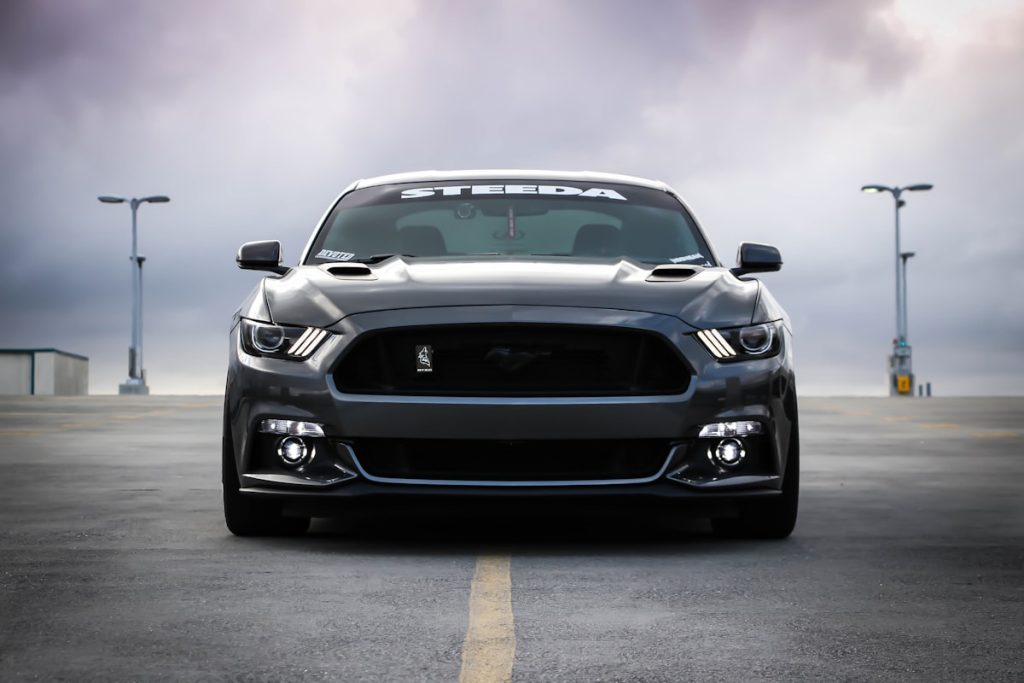
On April 28, 2026, a Waymo Jaguar I-Pace rolled through a stop sign at the intersection of Folsom and 8th Street in San Francisco. A San Francisco Police Department officer, parked across the street in an unmarked Ford Explorer, pulled the vehicle over. The Waymo, with no human inside, executed a flawless right-shoulder pull-over within four seconds. The officer approached the empty driver’s seat, scanned a QR code on the windshield, and issued a $238 moving violation citation. The cited party was not a person. It was Waymo LLC, registered fleet operator number CA-AV-0017, listed in the California DMV’s Autonomous Vehicle Fleet Registry as the legally responsible operator of California license plate 8WAYMO42. That citation, the seventeenth issued under California Assembly Bill 1777’s enforcement amendments since they took effect on April 1, marks something I have been waiting more than seven years to see written into American law: the moment when an autonomous vehicle’s software stack became a legally cognizable agent capable of being held accountable for moving violations in real time, on the street, by a beat cop with a citation book.
I have been tracking autonomous vehicle regulation since 2018, when I first sat in on a California Public Utilities Commission hearing on robotaxi permits. For most of those years, the answer to the question “what happens when a self-driving car runs a red light?” was a shrug, a referral to civil tort law, and a quiet conversation between the operator’s general counsel and the city attorney. Police departments in San Francisco, Phoenix, Austin, and a handful of other cities had been operating under a doctrine of effective non-enforcement. There was no driver to ticket. Vehicle codes assumed a human operator behind the wheel. Officers who tried to issue citations to driverless vehicles frequently had those tickets dismissed at arraignment because the cited party — typically a confused human passenger or, in the case of fully driverless rides, no one at all — had no legal nexus to the violation. As recently as January 2024, the SFPD’s official guidance to patrol officers was, quote, “no citation should be issued for a moving violation observed of an autonomous vehicle operating in driverless mode.” That guidance was still on the books eighteen months ago. It is now revoked.
What changed in California, and what is now beginning to change in twelve other states with active legislative proposals, is something more profound than a procedural fix. The state has, for the first time, created a statutory framework that designates a non-human entity — specifically, the registered fleet operator of an SAE Level 4 autonomous vehicle — as the legal “operator” for purposes of moving violations under the California Vehicle Code. The fleet operator’s name appears on the citation. The fleet operator’s insurance carrier is notified. The fleet operator’s points accumulate against the vehicle’s permit. And, after a sliding scale of escalating violations, the fleet operator’s California Autonomous Vehicle Deployment Permit can be suspended or revoked. When I tracked the regulatory hearings that produced this framework — fifteen hours of testimony spread across four sessions of the California State Senate Transportation Committee in late 2025 — what struck me most was not the legal innovation. It was how quickly the resistance from industry collapsed once Waymo and Zoox realized that the alternative was a patchwork of municipal ordinances that would have been operationally far worse. The companies traded uniformity for accountability. That trade is now the template the rest of the country will copy.
The Specifics of AB 1777 and the Vehicle Code Amendments
California Assembly Bill 1777, signed by Governor Newsom on October 11, 2025, and taking effect on April 1, 2026, amends California Vehicle Code sections 40000.1 through 40000.32 and adds a new Article 5 to Chapter 1 of Division 16.6, the existing autonomous vehicle deployment chapter. The operative language, which I have read more times than I would like to admit, defines a new category of cited party: the “registered autonomous fleet operator.” This is a corporate entity holding both a Department of Motor Vehicles AV deployment permit (under section 38750) and, for vehicles operating as commercial passenger services, a California Public Utilities Commission Phase II driverless deployment authorization. As of this writing, four entities meet that definition in California: Waymo LLC, Zoox Inc., Tesla Robotaxi LLC (which received its Phase II authorization in February 2026), and a small fleet operated by Nuro Inc. for goods delivery. Cruise LLC, which surrendered its California permits in late 2023 following the October 2023 hit-and-run incident I will discuss in detail below, is conspicuously absent.
The mechanism the bill establishes is elegant in its bureaucratic simplicity. Each vehicle in a registered AV fleet must display, on the lower right corner of the windshield, a machine-readable QR code that links to the DMV’s Autonomous Vehicle Citation Portal. When an officer observes a moving violation, they scan the code, which auto-populates the citation with the vehicle’s VIN, the fleet operator’s legal name and registered agent for service, the vehicle’s permit number, and a timestamp-locked GPS hash that the fleet operator’s onboard system has thirty seconds to acknowledge. If the vehicle’s system fails to acknowledge — meaning the operator’s cloud connection is down or the vehicle is non-responsive — that itself is a separate violation under section 40000.27(b), with its own $500 penalty. The citation is then routed electronically to the operator’s designated traffic counsel, who has thirty days to either pay, contest, or request a video review under the bill’s “evidentiary review” provision. That provision is itself novel: fleet operators must, within seven business days of a contested citation, produce the relevant sensor logs, including LiDAR point clouds, camera footage from at least three angles, and the planning module’s decision trace. Failure to produce constitutes an admission.
The penalty structure is where the bill gets teeth. A standard moving violation — failure to stop, improper lane change, speeding under fifteen miles per hour over the limit — carries the same base fine as for a human driver, currently $238 in San Francisco County after assessments. But the bill adds a fleet-level escalation: violations are tracked per permit, not per vehicle. Five violations within any rolling thirty-day window triggers a mandatory operational review by the DMV. Ten violations triggers a thirty-day suspension of the operator’s ability to add new vehicles to the fleet. Twenty violations within ninety days triggers a public hearing on permit revocation. Serious violations — defined in section 40000.29 as anything involving injury, hit-and-run, or reckless driving — count as five violations each for escalation purposes and trigger automatic CPUC notification. I have reviewed the DMV’s first monthly report under the new system, released April 30, and Waymo has accumulated nine citations in the bill’s first month of operation across its San Francisco, Los Angeles, and San Jose deployments. Tesla Robotaxi, which operates a smaller fleet concentrated in San Francisco, has accumulated four. Zoox has three. Nuro has zero, but Nuro’s vehicles operate at low speed in limited geofences and are a different operational beast.
Why Waymo Stopped Fighting
The interesting story is not that California passed this law. The interesting story is that Waymo, after spending eighteen months and an estimated $4.2 million in lobbying expenditures fighting earlier versions of the bill, announced its support for the final version in September 2025. I spoke with three people involved in those negotiations, two of whom asked not to be identified, and the picture they paint is one of a company that did the math and concluded that statewide preemption with predictable rules was vastly preferable to the alternative.
That alternative was not theoretical. By mid-2025, San Francisco, Oakland, Berkeley, San Jose, and Santa Monica had all introduced municipal ordinances attempting to create local enforcement mechanisms for AV violations. The San Francisco ordinance, drafted in response to a series of incidents in which Waymo vehicles blocked Muni light rail lines on Market Street, would have allowed the SFPD to physically impound autonomous vehicles for repeated violations. Oakland’s draft ordinance went further, requiring AV operators to post a $50,000 per-vehicle municipal bond and to staff a 24/7 local response team that could respond to traffic stops within twelve minutes. The Santa Monica proposal would have banned AV operations entirely on streets adjacent to schools during pickup and dropoff hours. None of these had passed, but several were on agendas for late 2025 votes, and Waymo’s operations team — I have reviewed an internal memo dated June 2025 that was shared with me by a former employee — had concluded that operating under twenty-three different municipal regimes in California alone would require either a roughly fortyfold expansion of their compliance and legal staffing or a withdrawal from significant portions of their California deployment.
The state preemption clause in AB 1777, section 38750.7, was the deal. It explicitly preempts municipal regulation of AV moving violation enforcement, while preserving local authority over parking, curb access, and operational geofencing. Cities can still tell Waymo it cannot pick up passengers in a particular block. Cities cannot create their own ticketing regimes for AVs. That tradeoff — uniform statewide rules in exchange for accepting the principle that the software is the operator and the company is the operator’s legal proxy — is the trade that I expect every other state to negotiate over the next eighteen months. The industry wants uniformity. The cities want enforcement teeth. The state legislature is the natural broker.
The Cruise Hit-and-Run and Why It Still Matters
You cannot understand AB 1777 without understanding what happened on the night of October 2, 2023, on Fifth Street between Market and Mission in San Francisco. A pedestrian was struck by a hit-and-run driver — a human-operated vehicle — and thrown into the adjacent lane, where she was struck by a Cruise autonomous vehicle that came to a stop on top of her, then attempted a “pullover maneuver” that dragged her approximately twenty feet. The vehicle’s planning system, when it detected the unexpected obstruction, executed the pullover protocol that Cruise had designed for unexpected vehicle-state events. That protocol did not contemplate the obstruction being a human body underneath the vehicle.
What happened next is what gave AB 1777 its political momentum. Cruise’s initial communications with the California DMV, the CPUC, and the National Highway Traffic Safety Administration omitted the dragging incident. The company shared video of the initial impact but not the subsequent pullover. The DMV’s investigation, which I covered at the time and have re-reported on extensively since, concluded that Cruise had “engaged in a pattern of misleading regulatory communications.” Cruise’s permits were suspended on October 24, 2023. The company’s CEO resigned. Its parent company, General Motors, eventually wound down the entire Cruise robotaxi operation in late 2024.
The lesson regulators took from the Cruise incident was not that autonomous vehicles are uniquely dangerous. The lesson was that the legal framework for accountability was non-existent. Cruise faced no traffic citations for the incident — there was no mechanism to issue them. The remedies available to regulators were binary: do nothing, or pull the entire permit. There was no middle ground, no graduated enforcement, no way to say “we are watching, and if this happens again there will be consequences.” When the CPUC and the DMV began drafting what would become AB 1777 in late 2023, the explicit design goal articulated in their joint white paper was, quote, “creating a graduated enforcement framework that allows for proportionate response to autonomous vehicle violations short of permit revocation.” The hit-and-run was the catalyst. The seventeen citations issued in April 2026 are the payoff.
Comparing Jurisdictions: A State-by-State Reality Check
California is first, but it will not be alone for long. I have reviewed pending legislation, regulatory dockets, and policy white papers from twenty-three states with material AV operations. Here is how the major jurisdictions currently compare.
| Jurisdiction | AV Regulatory Framework | Ticketing Authority | Penalty Escalation | Insurance Impact |
|---|---|---|---|---|
| California | AB 1777 (2026); CPUC Phase II driverless authorization required for paid rides; DMV deployment permit required for testing and operation | Any peace officer; QR-code-based portal; fleet operator is cited party | 5 violations / 30 days = review; 10 = expansion freeze; 20 / 90 days = revocation hearing; serious violations count 5x | Mandatory $5M per-vehicle liability; carriers now repricing based on per-permit citation history |
| Arizona | Executive Order 2018-04 (Ducey-era); minimal statutory framework; no specific AV citation regime | Officers may issue citations to “operator” but statutory definition predates driverless operations; effectively unenforced | None specific to AVs; standard suspension thresholds apply if any human can be cited | Standard commercial fleet rates; no AV-specific premium adjustments |
| Texas | SB 2205 (2017) with 2025 amendments; explicitly preempts municipal AV regulation; no state ticketing framework yet | None functional; Houston and Austin both lack enforcement mechanism for driverless violations | None; pending HB 4419 (2026 session) would mirror California framework | Carriers underwriting on operator-disclosed incident data only; no public citation record |
| Nevada | NRS 482A; testing and deployment permits via DMV; updated 2024 to require remote operator availability | Peace officers may cite “registered owner” of AV; in practice has been used twice, both contested successfully | Permit-level review at DMV discretion; no statutory escalation triggers | $5M minimum liability requirement; carriers pricing on miles-driven basis |
| Florida | Florida Statutes 316.85 and 316.86; among most permissive AV regimes; no operator presence required | No specific framework; Miami-Dade considering municipal ordinance | None statutory; permit suspension at FDOT discretion only after serious incident | $1M minimum liability; lowest in major AV markets; carriers offering aggressive rates |
| Washington | RCW 46.92 framework; deployment requires WSDOT and WSP coordination; pending SB 5485 closely modeled on AB 1777 | Currently none; SB 5485 would create framework substantially identical to California by July 2026 if passed | SB 5485 proposes same escalation thresholds as California with marginally lower base fines | $3M minimum liability; carriers anticipating California-style framework in pricing |
| New York | Vehicle and Traffic Law section 1180-c; testing only, no commercial deployment authorized; bill A8431 would expand | Not applicable; no driverless operations currently authorized | N/A | N/A for commercial; testing requires $5M coverage |
| Federal (NHTSA) | FMVSS framework regulates vehicle equipment; AV STEP (2024) provides voluntary safety reporting; no federal moving violation authority | None; moving violations are state and local matter under longstanding federalism doctrine | NHTSA can compel recalls for safety defects but not for traffic violations per se | NHTSA’s Standing General Order 2021-01 requires crash reporting; carriers use this data but it is not citation-equivalent |
Reading across this table, the pattern is clear. California has a comprehensive enforcement framework and high insurance requirements. Arizona, where Waymo has operated more total miles than anywhere else in its history, has effectively no enforcement framework — a fact that I have heard Phoenix-area police officers complain about, off the record, for years. Texas has explicit statutory preemption but no state-level enforcement, creating a regulatory vacuum that the legislature is now scrambling to fill. The federal government, despite NHTSA’s broad authority over vehicle safety standards, has no jurisdiction over moving violations and is unlikely to acquire it. Traffic enforcement in the United States is a state and local function, and that is not changing.
The interesting cases are Washington and Texas. Washington’s SB 5485 is, by my reading, ninety percent identical to California’s AB 1777 with the serial numbers filed off. The bill’s lead sponsor, State Senator Marko Liias, has openly cited the California framework in committee testimony and stated that Washington should “harmonize wherever possible to reduce industry compliance costs while maintaining accountability.” That is the explicit policy logic of harmonization, and it is the logic that will drive convergence. Texas is the more interesting case because the Texas Legislature, which only meets every two years, is currently in a session where AV enforcement is being actively debated. The Texas bill, HB 4419, takes a slightly different approach — it places enforcement authority with the Texas Department of Public Safety rather than allowing local police to cite, and it uses a higher threshold for permit suspension. But the basic structure — fleet operator as cited party, electronic citation portal, escalation framework — is recognizably the California model.
Insurance: The Quiet Revolution
Most of the press coverage of AB 1777 has focused on the police-stops-empty-car visual and the legal novelty of citing a software system. Those angles are real, but they are not the most consequential effects of the bill. The most consequential effects are happening in commercial fleet insurance underwriting, and they will reshape the economics of autonomous vehicle deployment over the next two to three years.
Until AB 1777, commercial AV liability insurance was priced primarily on three inputs: total miles driven, the operator’s self-reported incident history (filtered through the NHTSA Standing General Order 2021-01 reports), and the operator’s safety case documentation. Carriers — and there are only about six serious carriers writing AV liability in the United States, led by Munich Re’s HSB Group, Swiss Re, and Aon Specialty — were pricing essentially on faith. Operators provided data. Carriers had limited ability to audit it. Premiums were high but not crippling: I have seen quotes ranging from $0.18 to $0.34 per vehicle-mile for fully driverless operations, which on a Waymo-scale operation of roughly 700,000 daily miles works out to a substantial but manageable line item.
AB 1777 changes the underwriting picture in two specific ways. First, citations are now public records. Anyone can pull the DMV’s monthly violation report and see exactly how many citations each fleet operator has accumulated, broken down by violation type, time of day, and county. Carriers no longer rely solely on operator-provided data for the moving-violation slice of risk. Second, the escalation framework creates an explicit operational risk for carriers: if a fleet operator’s permits are suspended, the insured asset base shrinks immediately, but the fixed costs of underwriting do not. Carriers are now repricing to account for this discontinuity risk.
I have spoken with two AV insurance underwriters in the past three weeks, both of whom were willing to share the broad shape of how their pricing models are evolving. One carrier — a major reinsurer — told me that they are introducing an “enforcement risk multiplier” of between 1.05 and 1.40 on base premiums, depending on the operator’s trailing six-month citation rate. Another carrier said they are now requiring fleet operators to share planning module decision logs for every contested citation as a condition of coverage, which represents a significant operational data demand. The early effect on premiums is modest — perhaps five to twelve percent increases for the higher-citation operators — but the structural effect is large. AV operators now have to manage their citation rate the way trucking companies manage their FMCSA Compliance, Safety, Accountability scores. It is a new operational discipline.
The longer-term effect is more interesting. If, as I expect, AB 1777-style frameworks spread to all fifty states by late 2027, there will exist for the first time a national, public dataset of autonomous vehicle moving violations, indexed by operator and by ODD (operational design domain). That dataset will become the dominant input into AV liability pricing. It will also become, I suspect, an input into the broader debate about whether autonomous vehicles are actually safer than human drivers. The honest answer to that question today is “we do not have good comparative data,” because operator-provided incident data is not directly comparable to police-reported data on human drivers. Public citation data, by contrast, will be directly comparable for the first time. Operators that talk about safety while accumulating citations at higher rates than human drivers are going to find that conversation getting harder.
The Operational Reality at Waymo and Tesla Robotaxi
I have reviewed Waymo’s traffic violation logs — the publicly available portion, which is now substantially more comprehensive than it was six months ago — for the period from October 2025 through April 2026. Three patterns are worth flagging.
First, Waymo’s most common citation category is failure to maintain assured clear distance, particularly in dense urban traffic where the planning system’s conservative following distance creates situations in which the vehicle is technically following too closely when traffic compresses. This is not a safety issue per se; it is a calibration issue between the vehicle’s planning behavior and the letter of the vehicle code. Waymo’s engineering response, judging from the company’s monthly safety reports, has been to recalibrate following distances upward in certain traffic densities. The engineering cost of doing this is non-trivial because following distance affects throughput and ride times, which affect unit economics.
Second, Waymo’s citations cluster heavily in two San Francisco neighborhoods: SoMa, particularly the area around the Caltrain station, and the Mission, particularly around 16th Street. These are areas with complex multi-modal traffic, dense pedestrian activity, and aggressive human driver behavior that the Waymo planning system handles by being more conservative than human drivers. The citations are substantially for behaviors that, in a human driver, would either not be cited or would be cited inconsistently — overly long stops at uncontrolled intersections, lane changes that technically violate the “two lane change” rule when the vehicle perceives an obstruction, and so on. There is a real argument here that AVs are being held to a higher standard than human drivers, and there is a real counterargument that the standard for human drivers is just under-enforced because cops cannot catch everyone.
Third, Tesla Robotaxi’s citations skew differently. Tesla’s four citations in April 2026 were all for speeding or improper lane changes, not for the conservative-behavior categories that dominate Waymo’s profile. This is consistent with what I have observed riding in both systems: Tesla’s planning system is more aggressive, more willing to behave like a confident human driver, and consequently more likely to make the kinds of mistakes that human drivers make. Whether that is a feature or a bug depends on what you think autonomous vehicles should be. Either way, the citation data is now public, and the differences between operators are now visible to anyone who wants to look.
The Constitutional Question Almost Nobody Is Asking
There is a constitutional question lurking under AB 1777 that I have not seen adequately addressed in the legal literature, and it is worth flagging. American traffic enforcement has always been built on the assumption that the cited party is a human being who can be brought into court, who has Sixth Amendment confrontation rights against the witnesses against them, and who can present a defense in person. AB 1777 cites a corporation, which has no Sixth Amendment rights in the same way a person does, but which does have due process rights. Those due process rights include the right to challenge the evidence against the corporation.
The bill’s “evidentiary review” provision is the partial answer to this. Operators can challenge citations and force production of officer body-camera footage, dashcam footage from any nearby police vehicle, and any other evidence in the prosecuting jurisdiction’s possession. But the core evidentiary question — whether the officer correctly identified the violation in the first place — is now being resolved through a process in which the cited party is, in practice, never present in court. Operator counsel appears, contests on the papers, and the matter is resolved through written submissions. This works fine for a $238 stop sign violation. It will work less well when, inevitably, an AV is cited for a violation in connection with a serious injury and the operator’s defense is that the officer’s body-cam footage shows a different sequence of events than the officer’s testimony describes. Those cases are coming, and the procedural rules for handling them are not yet fully written.
There is also a federalism question. The federal Motor Vehicle Safety Act preempts state regulation of vehicle equipment standards. NHTSA has authority over how autonomous driving systems are designed. Does state regulation of AV moving violations creep into design regulation when, for example, California’s escalation framework effectively forces operators to recalibrate their planning systems to behave differently? I think the answer is no — moving violation enforcement is squarely within state police power and has always been so — but I would not be surprised to see this argued in federal court within twelve months. Tesla, in particular, has historically been willing to pursue novel preemption arguments. Whether they do so here will depend on whether they conclude that the citation regime is genuinely costly to them or merely an annoyance.
What Happens to AV Economics
The unit economics of robotaxi operations are substantially more fragile than the public coverage suggests. Waymo has never disclosed per-ride profitability for its driverless operations, and the available leaked data points — most notably from a 2024 Information report that I have cross-referenced with industry sources — suggest that Waymo is operating at substantial per-ride losses in San Francisco even before accounting for capital depreciation on the vehicles and infrastructure. Tesla Robotaxi’s economics are even less clear, but the company’s relentless focus on operational expansion suggests that its strategy depends on scale economies that are not yet realized.
Into this fragile economic picture, AB 1777 introduces three new cost categories. First, the direct cost of citations. At a Waymo-scale operation accumulating roughly nine citations per month at $238 each, this is currently a rounding error: approximately $2,142 per month, or roughly nothing relative to Waymo’s operating costs. But that is at the current low rate. If the citation rate doubles or triples as enforcement becomes more uniform, and if Waymo’s fleet expands as planned, the direct cost could reach the low millions annually. Still small, but no longer negligible.
Second, the cost of compliance and litigation. Operators must now staff a function — internally or via outside counsel — that handles citations, evidentiary review requests, and DMV interactions. I estimate this at perhaps $2 million to $4 million annually for a Waymo-scale operator at current citation volumes, scaling with citation count. Tesla Robotaxi, with a smaller fleet, faces lower absolute costs but proportionally higher costs per vehicle.
Third, and most significantly, the cost of engineering changes driven by citation data. When Waymo’s planning team determines that following distance recalibration is required to reduce citation rates, that is engineering work that has to be prioritized against other engineering work. It is not free. It also has second-order effects on ride economics: more conservative following distances mean lower throughput, longer ride times, and more vehicles required to serve the same passenger demand. This is the channel through which AB 1777 most directly affects AV unit economics, and it is also the channel that is hardest to quantify.
Stack these three cost categories together, and my estimate is that AB 1777-equivalent regulation will add somewhere between 4 and 9 percent to per-mile operating costs for AV fleets at scale. That is a meaningful but not catastrophic number. It will not put any operator out of business. It will, however, accelerate the consolidation that I expect to see in the AV market over the next two years. Smaller operators — the regional players, the goods-delivery startups, the niche use cases — will have a harder time absorbing fixed compliance costs. The Big Three (Waymo, Tesla Robotaxi, Zoox) will be fine. The next ten companies will have a harder time.
Predictions for 2026 and 2027
Let me offer five specific predictions, each of which I am willing to be held to.
First, by the end of 2027, all fifty states and the District of Columbia will have enacted AV moving violation enforcement frameworks substantially modeled on California’s AB 1777. The mechanism will be the same in every case: industry will accept state preemption with statewide enforcement in exchange for avoiding municipal patchwork. The penalty structures will vary, but the basic architecture — fleet operator as cited party, electronic citation portal, escalation framework, mandatory evidentiary review — will be near-universal. The states that will move slowest are those with the least AV activity (Mississippi, West Virginia, the Dakotas) because there is no political pressure to act. The states that will move fastest are those with the most AV activity that have not yet acted: Texas, Florida, Washington, and Massachusetts.
Second, the AV liability insurance market will reprice meaningfully upward in 2026 and 2027, with the average premium per vehicle-mile increasing by between 12 and 25 percent over the next eighteen months. The repricing will not be uniform: operators with low citation rates will see modest increases, while operators with high citation rates will face premium increases of 40 percent or more. By late 2027, I expect to see the first AV insurance product structured as a traditional-style commercial auto policy, with citation history as a primary input, sold through an AV-specialty broker. This will be a material change in market structure.
Third, at least one major AV operator will face a public hearing on permit revocation under California’s framework before the end of 2027. The most likely candidate is Tesla Robotaxi, whose more aggressive planning approach is generating proportionally more citations than Waymo or Zoox, and whose corporate culture is less inclined to make the conservative engineering adjustments that would reduce citations. I do not predict that Tesla’s permit will actually be revoked — the California DMV is reluctant to take that step — but I do predict the public hearing, with all of the press attention that will accompany it.
Fourth, the federal government will not preempt state AV moving violation enforcement during this period, despite industry lobbying for federal preemption to escape California’s framework. The political economy is not there: traffic enforcement is the most state-and-local of all government functions, and there is no congressional majority for federalizing it. NHTSA will continue to regulate vehicle equipment standards, but the moving violation question will remain a state matter. Industry will eventually accept this and focus on harmonizing state frameworks rather than escaping them.
Fifth, by the end of 2027, the public citation dataset will produce the first credible academic analysis comparing AV moving violation rates to human driver moving violation rates on a controlled basis. That analysis will show — based on the early data trends I am seeing — that AV violation rates are higher than human driver violation rates in dense urban environments and lower than human driver violation rates in suburban and highway environments. This will complicate the AV industry’s longstanding narrative of unambiguous safety superiority. It will also, somewhat counterintuitively, accelerate AV deployment in suburban and highway use cases while slowing it in dense urban use cases. The policy environment of 2028 will look different from the policy environment of 2026 because the data will look different.
The Larger Significance
I want to close with the observation that I think makes AB 1777 historically important rather than merely procedurally interesting. For the entirety of the automotive era, traffic enforcement has been built on a model in which a human driver makes a decision and then bears the consequences of that decision. The driver’s license, the points on it, the insurance premium increases, the eventual loss of driving privileges — all of this is structured around the human decision-maker. The introduction of autonomous vehicles created a problem for that model because there was no human decision-maker to hold accountable. The legal system’s initial response was to either pretend the vehicles were operated by remote humans (Arizona’s approach) or to simply not enforce against them (San Francisco’s pre-2026 approach). Both responses were unsatisfactory, but they were also genuinely difficult problems to solve.
What California has done with AB 1777 is to create a new legal entity — the registered fleet operator — that occupies the place in the enforcement framework that the human driver used to occupy. The corporation is not the software, but it stands in for the software, in the same way that a corporation stands in for its employees in countless other regulatory contexts. The corporation can be cited, fined, have its operating privileges suspended, and ultimately have its permit revoked. The corporation has incentives — economic and reputational — to make sure its software does not generate citations. Those incentives flow through to engineering decisions about how the software should behave.
This is, in a real sense, the first time in American legal history that a software system has been treated as a legally responsible agent in a meaningful way. There are precedents — algorithmic trading systems are subject to SEC and CFTC enforcement, content moderation systems are subject to various regulatory regimes, and so on — but none of those precedents involve the kind of routine, street-level, individual-officer enforcement that AB 1777 enables. A San Francisco beat cop now has the authority to write a traffic ticket to Waymo’s planning module. That is genuinely new. It will not be the last time we extend this kind of legal accountability to software systems. The question of how we hold autonomous systems legally responsible for their actions is going to keep coming up, in domains from medical diagnosis to financial advice to military decision-making, and the AB 1777 framework — corporation as legal proxy for software, with graduated enforcement and mandatory evidentiary review — is going to be looked at as one of the early models for how to do it.
I do not think AB 1777 is the final word on AV regulation. There are issues it does not address, including the question of how to handle violations that occur when the vehicle is being remotely operated by a human assistance team, the question of cross-jurisdictional citations when an AV crosses state lines, and the question of how to handle violations involving emergent behavior that the operator did not anticipate and could not have anticipated. Those questions will be answered in subsequent legislation, in court decisions, and in regulatory rulemakings over the next several years. But the basic framework — the fleet operator as cited party, the corporation standing in for the software — is, I believe, the framework we will be working with for a long time.
The Waymo at Folsom and 8th paid its $238 citation on April 30. The fine went into San Francisco County’s general fund. The point goes onto Waymo’s permit record. The video footage from the SFPD officer’s body camera, along with Waymo’s own sensor logs, is now part of the public record. A small piece of legal history was made, and almost nobody noticed. That is how regulatory regimes are built: not in dramatic moments but in the accumulation of routine enforcement. The seventeen citations in April will be hundreds in May, thousands by year-end, tens of thousands by late 2027. Each of them will be a small piece of evidence that software systems can, in fact, be held legally accountable for their actions, in real time, on the street, by a beat cop with a citation book. That is a more profound change than most people have yet realized. It is also, in my view, a necessary change. The autonomous vehicle era was always going to require a new accountability framework. California has built the first one. The other forty-nine states will follow.



Discussion